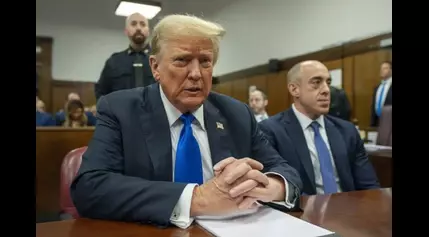
Judicial Showdown: Trump's Hush Money Trial Faces Immunity Ruling Delay
In a surprising turn of events, the judge presiding over the high-profile hush money trial of former President Donald Trump has pushed back a crucial ruling on presidential immunity until just two days before the scheduled sentencing. This decision has added an extra layer of complexity to the already contentious legal proceedings, leaving the public and political observers alike eagerly awaiting the outcome.Unraveling the Legal Tapestry: A Pivotal Moment in Trump's Hush Money Saga
Delayed Immunity Ruling: A Strategic Maneuver?
The original plan was for the judge, Juan Merchan, to deliver his decision on the issue of presidential immunity on September 6th, just a few days before Trump's scheduled sentencing on September 18th. However, in a letter made public on Tuesday, Merchan announced that he has pushed back the immunity ruling to September 16th, a mere two days before the sentencing. This unexpected move has raised eyebrows, with legal experts and political analysts speculating on the potential implications.One possible interpretation is that the judge is seeking to maintain a delicate balance, allowing the legal process to unfold while minimizing the potential for political interference or public pressure. By delaying the immunity ruling until the last minute, Merchan may be aiming to minimize the impact of the decision on the overall trial proceedings, ensuring that the focus remains on the merits of the case rather than the political implications.
The Immunity Question: Navigating the Complexities of Presidential Power
The issue of presidential immunity is at the heart of this case, as Trump's legal team has argued that he should be shielded from prosecution due to his former status as the commander-in-chief. The judge's decision on this matter will have far-reaching consequences, not only for Trump's legal fate but also for the broader understanding of the limits of executive power.Legal scholars have long debated the extent to which a sitting or former president can be held accountable for alleged wrongdoings committed during their time in office. The concept of presidential immunity is rooted in the principle of separation of powers, which aims to prevent the judicial branch from unduly interfering with the executive branch's ability to function.However, the boundaries of this immunity have been the subject of intense legal and political discourse, with some arguing that it should not extend to criminal acts unrelated to official duties. The outcome of this case could set a precedent that will shape the future of presidential accountability and the balance of power between the branches of government.
The Sentencing Conundrum: Navigating the Aftermath of the Immunity Ruling
The timing of the immunity ruling, just two days before Trump's scheduled sentencing, adds an additional layer of complexity to the proceedings. Depending on the judge's decision, the sentencing could take on vastly different implications.If the judge rules in favor of Trump's immunity, it could significantly impact the sentencing, potentially leading to a reduced or even dismissed sentence. This scenario would be a major victory for the former president and his legal team, potentially setting the stage for further legal battles and political fallout.Conversely, if the judge denies Trump's claim of immunity, the sentencing could take on a more consequential tone, with the potential for a harsher punishment that could have lasting repercussions for the former president and his political aspirations.Regardless of the outcome, the timing of the immunity ruling and its proximity to the sentencing hearing will undoubtedly be a subject of intense scrutiny and debate, as legal experts and political observers alike seek to understand the broader implications of this pivotal moment in the hush money trial.
The Broader Implications: Shaping the Future of Presidential Accountability
The hush money trial and the accompanying legal battles over presidential immunity have far-reaching implications that extend beyond the immediate case. The outcome of this trial could set a precedent that will shape the future of presidential accountability and the balance of power between the executive and judicial branches.As the legal landscape continues to evolve, the public and political observers will be closely watching the proceedings, eager to understand the extent to which a former president can be held accountable for alleged wrongdoings. The judge's decision on the immunity question, and the subsequent sentencing, will undoubtedly have a lasting impact on the ongoing debate over the limits of executive power and the role of the judiciary in holding the highest office in the land accountable.Ultimately, the hush money trial and the surrounding legal battles represent a critical juncture in the ongoing struggle to uphold the principles of democracy and the rule of law. The outcome of this case will not only determine the fate of the former president but will also shape the future of presidential accountability and the delicate balance of power that underpins the American system of government.