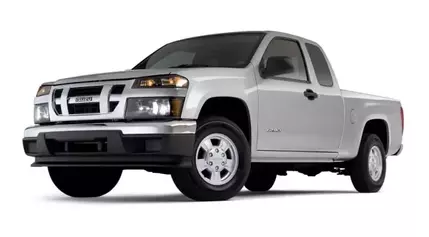
Isuzu's Ill-Fated Attempt to Revive the Pickup Market
In 2005, Isuzu introduced the i-Series lineup as a successor to the Hombre lineup, hoping to capitalize on the growing demand for light-duty pickups in North America. However, the i-Series was merely a rebadged version of the Chevrolet Colorado/GMC Canyon, and its lackluster performance ultimately led to its demise just a few years later.Isuzu's Ambitious Comeback Bid Falters in the Face of Economic Turmoil
Reviving the Hombre Legacy
After the successful experience with the Hombre lineup, which was a rebadged Chevrolet S-10, GM and Isuzu decided to launch a successor for it, the Isuzu i-Series. The new pickup was offered in two cabin configurations: an Extended Cab with two plus two doors, and a Crew Cab with four full-size doors. This allowed Isuzu to cater to a wider range of customer preferences and needs.
Underestimating the Impact of the Global Financial Crisis
However, General Motors didn't anticipate the devastating impact of the 2007 global financial crisis on the automotive industry. While the Chevrolet-badged version of the vehicle sold in significant numbers, Isuzu struggled to attract a similar level of customer interest. Despite the i-Series' competitive features and capabilities, its sales numbers remained disappointingly low, reaching just around 1,500 units over a four-year period. Faced with these dismal sales figures, GM ultimately decided to discontinue the model.
A Missed Opportunity for Isuzu
Interestingly, when the automaker stopped production, the first i-Series models still had three years of warranty left, indicating that Isuzu had invested significant resources in developing the vehicle. This suggests that the i-Series could have been a viable contender in the pickup market, had it not been for the unforeseen economic downturn that severely impacted consumer demand.
Minimal Differentiation from the Chevrolet Colorado
GM's expertise in creating successful badge-engineered vehicles was evident in the development of the Isuzu i-Series. However, the automaker's approach to differentiating the i-Series from the Chevrolet Colorado was somewhat lackluster. Apart from a few minor styling cues, such as a distinctive grille design, the two vehicles were nearly identical in their appearance and features.
Targeting the Lower-Budget Segment
The 2005 Isuzu i-Series Extended Cab was designed to appeal to the lower-budget segment of the light-utility vehicle market in North America. This was reflected in its utilitarian interior design, featuring a hard-plastic dashboard and a basic instrument cluster. The vehicle also came with unpainted black bumpers, door mirrors, and handles, further emphasizing its budget-friendly positioning.
Powertrain Options and Configurations
Under the hood, the 2005 Isuzu i-Series Extended Cab was available with a choice of two GM-sourced engines: a 2.8-liter inline-four powerhouse as the base model, and a 3.5-liter V6 for the upper trim levels. Both engine options were paired with either a five-speed manual transmission or a four-speed automatic gearbox, and were available with a 4WD system. In 2007, Isuzu updated the engine lineup, replacing the 2.8-liter unit with a 2.9-liter engine and the 3.5-liter V6 with a 3.7-liter unit.Despite Isuzu's efforts to revive its pickup lineup with the i-Series, the vehicle's lack of differentiation from its Chevrolet counterpart and the unfavorable market conditions ultimately led to its demise. The i-Series' short-lived tenure serves as a cautionary tale for automakers attempting to capitalize on existing platforms, underscoring the importance of creating a truly distinctive and compelling product to stand out in the highly competitive pickup truck segment.